
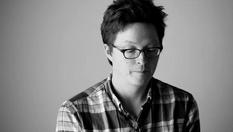
The twenty poems in Michael Dickman’s Flies (2011) employ the recognizable forms of his prosody, viz., a lyric mode mixed with prose written in a conversational manner, which is sparingly punctuated. Flies, however, has a sweeping surrealistic style of portraiture and makes more extensive use of symbolism than does The End of the West. Despite the fact that many reviewers have similarly described his poetic style in this volume, Dickman himself has renounced the “surreal” characterization of Flies in an interview and a reading for Emory University, maintaining that his real-life experience was consistent with that depicted in Flies and, we gather, irreducible to such labels. Notwithstanding this testimony, for better or worse, the literary critic must follow a path that attempts commentary in a way most readers will understand.
The thread that holds the volume together is the death of Dickman’s older brother, Darin, whose ethereal spirit always surpasses that of the flesh-and-blood family members also featured therein. Dickman, the ever-younger brother, again adopts the naive voice and perspective used in The End of the West, as opposed to one that might be tempted to rationalize and thereby gloss the terrible tragedy surrounding a brother’s death from a drug overdose. Thus, he approaches these difficult and ordinarily suppressed feelings from the viewpoint that inherently rejects “adult” or “sophisticated” conflations of the world and life. In their place he creates phantasmagoric figurations, but with decidedly lighter accents, unlike The End of the West, as if envisioning a better life of hope and happiness and thereby sublimating the nightmare. As his composition becomes increasingly sophisticated, the naive persona gives way to a maturing perspective that we see unfold through the sequence of Flies. By thus liberating his internal pain Dickman finds a way to share his growth experience with readers. In the process, he expands his representations of our shared mortality, the imperfection and fragility of life, family, and God, to those one might see in the mind of Hieronymus Bosch, in the style of Jean-Michel Basquiat (whose art is depicted on the cover of the Flies).
We had a preview of these sentiments in the third section of “The End of the West” where the dead brother is literally portrayed as a “saint” on the order of Saint Francis of Assisi. In Flies, the saint has become Superman in “Dead Brother Super Hero“:
He saved my brain
from its burning
building
He stopped and started the bullet in my heart
with his teeth
Just like that
He looked down from outerspace through all the clouds birds
dropping like weights
He looked out
from the center of the earth
through the fire
he was
becoming
in the doorway
and closed his eyes
his cape sweeping
the floor
He needs Superman because the world is a dangerous place, as he observes in “Be More Beautiful”:
Whatever it is I was made for I haven’t yet started
The morning makes its way up the street as a loose pack of wild dogs
Their invisible metal teeth
welcoming all the birds in the neighborhood
and me
The stars are wrong . . .
In “The Sea,” the same sense of dread is communicated, even in this uncustomary (for Dickman) literary reference:
Prospero helps the dead Neruda over the weird dunes
covered with bees
and scrub grass
gingerly stepping
around
the hypodermics in the jellyfish
But the literary reference communicates, at least in part, how Dickman’s inner life in literature is a benevolent guiding force, just as Virgil guided Dante. Dickman clarifies this further in “Emily Dickinson to the Rescue.”
Standing in her house today all I could think of was whether she
took a shit every morning
or ever fucked anybody
or ever fucked
herself
God’s poet
singing herself to sleep
You want these sort of things for people
Bodies and
the earth
and
the earth inside
Instead of white
nightgowns and terrifying
letters
Here Dickman moves beyond the existential dilemma that imprisoned him in The End of the West. We sense that he is finding a way to live in the world and accept the cold realities of life:
Heaven is everywhere
but there’s still
the world
The world is Cancer House Fires and Brain Death here in America
But I love the world
Emily Dickinson
to the rescue
I used to think we were bread
gentle work and water
We’re not
But we’re still beautiful
Killing each other as much as we can
beneath the
pines
The pines
that are somebody’s
masterpiece
This poem represents a move toward psychological maturity that was absent from the The End of the West. The image of Emily being swung around by a parent is anticipated in the fourth section of “False Start,” where Dickman’s brother is seen playing with his daughter:
At the end of one of the billion light-years of loneliness
My brother swims out into the ocean with his daughter holding hands
and talking quietly
Flies drop into the water
His daughter was a fly for a while
Small and black and gleaming in the palm of his hand
He blew on her gently and she woke up
Some miracle
He swam out across the waves swinging her screaming above his head
and looked like a father
The new daughter
Her new father
“False Start” is filled with images of Dickman remaking his world (which is essentially composed of his family and friends) into a more positive one. The first and second sections treat the mother and father positively. The third section sees his mother and father reunited in a little red wagon, with Dickman: “Hauling them out of the underworld/The overworld/Dragging them out of their mansions of snow.”
Dickman’s work here gains from the leitmotif use of “flies” in “False Start” and other poems in this volume. The classic symbol of mortality (see, cf., Damien Hirst’s works, A Thousand Years and Black Sun) is turned on its head here, where Dickman reinvents it as a benevolent force, at least until we read “Killing Flies.” The presence of the flies warps the visual field and its classic symbolism, making the flies seem salutary and beautiful, and the gadfly, if you will, of Dickman’s poetic creation. So the mother feeding the flies like recalcitrant children, patiently doing a “good job,” evidences her control, a way of fending off the bad spirits. Respectively, the father training flies, whose brains are “the color of his brains” and who are “going to make him rich,” is a wish for his father’s deliverance: “When he sings and he never sings we will see wings and brains.”
Doubtlessly, Dickman appreciates that the lighter touch in Flies may threaten to place a gloss on reality, reducing the poetry. Yet he appears to draw a heightened sense of self-awareness from it as he demonstrates in “Shaving Your Father’s Face“: “I tell a dirty joke and drag the steel across the universe.” He has doubtlessly realized that everyone unconsciously alters reality as a means to escape it (cf. “The Motive for Metaphor” by Wallace Stevens), and he has decided to ride this pony (or fly) to see where it takes him.
There’s nothing better
than shaving your father’s face
except maybe
shaving
your mother’s legs
My bedside manner is impeccable
The white foam stays white
Dickman may be toying with us by deliberately shaving above the Oedipal complex, but there is wit and humor in this conceit. Notably, in “Shaving My Father’s Face,” the father is “a father/ from some city/ of fathers,” and thus, personal histories are swept aside so that a normal, non-dysfunctional relationship can be imagined (“It’s as if his chin is made of Christmas lights you have to shave the dust and family off it takes forever”). The “white foam stays white” because no blood is spilt. The shaving is a way of altering a viewpoint (“I’m shaving my brain”):
The universe wants a close shave
It wants its hair
high
and tight
You could bounce a dime off Dad’s skin
My hand
on you face can you
feel it.
While this may be territory previously covered by Stevens and many other poets, Dickman puts a nice spin on it with his own comic opera or, better, musical thriller à la Sweeney Todd–Next To Normal. Furthermore, although Dickman’s treatment lightens the mood of this volume, Flies still delves into more frightening aspects of the past, as in “All Saints” and “Ralph Eugene Meatyard: Untitled.” A more complex discourse on faith occurs in the fourteen-section poem, “Stations,” again demonstrating maturity in his approach to the subject matter.
Lastly, Dickman finds himself at the end of the mourning process with the final three poems, “Killing Flies,” “Above Love,” and “Home,” which resolve the emotional turmoil and announce an apparent commitment to embrace life anew. In “Killing Flies,” Dickman imagines a time when he is older than his brother, leaving the “toxic green” of the flies, thereby signaling this return to normality:
The flies need to be killed as soon as we’re done eating this delicious meal they made
They serve us anything we want
in toxic green tuxedos
and
shit wings
My brother and I wipe our mouths
scrape our chairs back from the table
and stand up
These are the last things we’ll do together:
Eat dinner
Kill flies
Despite the difficulties of the roadway traveled in Flies, there is great sense of relief and repose in the ending of the volume, a true subsidence with genuine artistic merit.
What you want to remember
of the earth and
what you end up
remembering
The flies get stuck between the single-pane and the storm windows
Turning up the volume on everything
I could stay here for such a long time
And not go anywhere
not even with you
not even if you were
finally leaving
But your voice
there in front of me
where I am going
to live
The surrealist technique that Dickman employs in Flies works to his advantage, as he need not engage in the more difficult portraiture that realism demands; this allows the natural poet in him to work on intensifying emotional characterizations, which are his strongest suit. This may sound like a backhanded compliment, but all artists have weaknesses and strengths; it is the ability to play to strengths while stretching to improve weaknesses that shows the best side of an artist.
The poetry here poetry feels like an evolution of the Austin sensibility depicted in Richard Linklater’s films (e.g., Slacker, Dazed and Confused, SubUrbia and A Scanner Darkly), and the Northwest grunge rock of Dickman’s youth, the result being a passive aggressiveness that became the only bastion of defense for a number of white male artists who came to maturity at the turn of the 21st century. I do not say that these were his influences, albeit his connections with Austin and Portland are indisputable, only that his poetry has an affinity with the work of these other significant artists.
Michael Dickman’s poetry bites the hand that feeds it, but now a little less furtively than before. His poems are carpenter ants undermining the wooden foundation of the ubiquitous and never-ending television commercial that promises everything, just as the social and political forces have undermined his lost generation. What is important about Flies is Dickman’s maturing vision and his increasing control over technique. I wouldn’t be surprised if we see dramatic changes in his poetic expression in the coming years, and this could be very exciting for the poetry world.
 AGAINST INTERPRETATION
0 comments on “Reading Michael Dickman – Part II – Flies”