Reading Michael Dickman – Part III – “From the Canal”
Recently, The New Yorker (May 6, 2013) published Michael Dickman’s poem, “From the Canal.” It is a brilliant poem forContinue Reading
Poetry and Literary Criticism
Recently, The New Yorker (May 6, 2013) published Michael Dickman’s poem, “From the Canal.” It is a brilliant poem forContinue Reading

The twenty poems in Michael Dickman’s Flies (2011) employ the recognizable forms of his prosody, viz., a lyric mode mixed withContinue Reading

Despite the naïve generation X persona that Michael Dickman adopts in The End of the West (2009), his poetry isContinue Reading
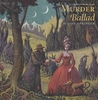
Murder Ballad by Jane Springer Jane Springer has taken her game to a higher level in her second book ofContinue Reading
Sometimes, especially if I’m tired of reworking a poem for the enth time, or lack a stimulating idea for aContinue Reading
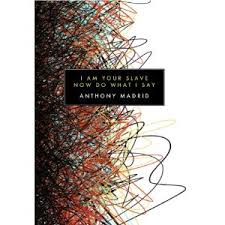
Of late Anthony Madrid seems inextricably linked with Michael Robbins, whom he met at the University of Chicago where bothContinue Reading
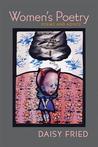
Fried is one of the most engaging contemporary poets writing today, for she is as thoughtful, witty and wise as the best conversationalists. Like two of her favorite poets, Charles Bukowski and Frank O’Hara, her utter lack of self-consciousness allows her to develop a unique connection with her readers, an intimacy that some poets would cut off their writing hands to replicate.
Like Bernard Malamud’s Roy Hobbs (“The Natural”) who can wield the physics of baseball with consummate skill, in fact making it look second nature, Newton, as poet, effortlessly repeats this triumph of language in poem after poem. Yet, Newton’s game is of a more serious kind, leading readers into the labyrinth of human emotions and then letting them see the Minotaur.
Coldfront Magazine has published a selection of the Top 40 Books of Poetry for 2012. These lists are helpful forContinue Reading

Poets have often used a gripping personal drama as an organizing structure within which to write poetry of greatContinue Reading

 AGAINST INTERPRETATION