Modernism
For an interesting introduction to the subject, I recommend Michael H. Whitworth’s anthology of modernist theory in his aptly entitledContinue Reading
Poetry and Literary Criticism
For an interesting introduction to the subject, I recommend Michael H. Whitworth’s anthology of modernist theory in his aptly entitledContinue Reading
Ms. Bernheim writes poetry that, like Mary Shelley, wakes the dead monster, shocking its cerebral cortex into life and giving it a beating heart that doesn’t want to be someone’s bloody experiment. It is a type of poetry whose art of presentation is breathtakingly fresh.
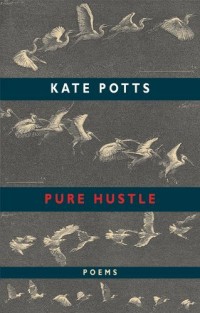
You can tell that Potts has a very high poetry I.Q., as this volume demonstrates her ability to engage in descriptive and affecting portraiture, which I think is her greatest gift.
Liz Berry is the Emerging Poet in Residence at Kingston University and already the owner of a distinguished publishing andContinue Reading
Okay, indulge me. Gather round while I tell you a story about something that has been going on for theContinue Reading
Armantrout’s technique is exploratory. She juxtaposes sermingly unrelated ideas and organizes them to evoke surprisingly intellectual and emotional resonances. In contrast to Pound’s imagism, Armantrout’s system of organization dislocates traditional associations in order to expose the fundamental bias of their presumptions.
As an introduction to my own blog entry on Randall Jarrell and George Steiner, I suggest you read Adrian Hon’sContinue Reading
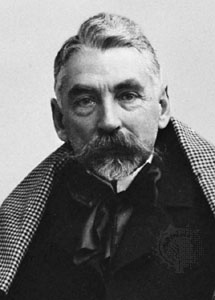
In this impressionistic translation of Stephen Mallarmé’s sonnet, “Le chevelure vol d’une flame à l’extrême,” I have attempted to discloseContinue Reading
While he writes as a new age poète maudit, following the example of François Villon, Tristan Corbière, and Claude Baudelaire, one can hardly recall a more confrontational voice that challenges the sanctity of everything, especially poetry, which Robbins cannibalizes with evil delight. The fading glory of the natural world and the Keatsian ideal, “truth is beauty, beauty truth,” hold nothing for him, except as sullied palimpsest upon which to write his inspired graffiti. In the Bizarro world of the irrational, profligate and amoral that Robbins apprehends, “The truth makes me hurl; the truth is a mistake.”
In 1950, Harvard hosted a conference called “The Defense of Poetry” where Randall Jarrell delivered his famous lecture on “The Obscurity of the Poet.” To Jarrell the obscurity of contemporary poetic expression was less an absolute value and more the result of the decline of readers who relied on literary texts as a primary means of cultural edification. Twenty-eight years later, George Steiner (in “Text and Context,” the first essay in his renowned treatise, On Difficulty) came to the same conclusion, albeit with a different treatment of the subject matter, and offered a more draconian solution to the problem of the evaporating degrees of literacy among English readers.

 AGAINST INTERPRETATION