
Reading Michael Dickman – Part I – The End of the West
Despite the naïve generation X persona that Michael Dickman adopts in The End of the West (2009), his poetry isContinue Reading
Despite the naïve generation X persona that Michael Dickman adopts in The End of the West (2009), his poetry isContinue Reading
Jennifer Grotz won the inaugural Eugene Paul Nassar Poetry Prize for The Needle. The prize carries a $2,000 award forContinue Reading
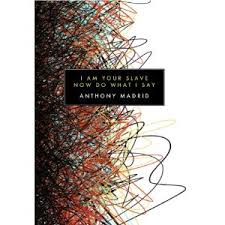
Of late Anthony Madrid seems inextricably linked with Michael Robbins, whom he met at the University of Chicago where bothContinue Reading
Ms. Bernheim writes poetry that, like Mary Shelley, wakes the dead monster, shocking its cerebral cortex into life and giving it a beating heart that doesn’t want to be someone’s bloody experiment. It is a type of poetry whose art of presentation is breathtakingly fresh.
Armantrout’s technique is exploratory. She juxtaposes sermingly unrelated ideas and organizes them to evoke surprisingly intellectual and emotional resonances. In contrast to Pound’s imagism, Armantrout’s system of organization dislocates traditional associations in order to expose the fundamental bias of their presumptions.
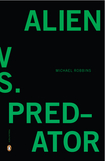
While he writes as a new age poète maudit, following the example of François Villon, Tristan Corbière, and Claude Baudelaire, one can hardly recall a more confrontational voice that challenges the sanctity of everything, especially poetry, which Robbins cannibalizes with evil delight. The fading glory of the natural world and the Keatsian ideal, “truth is beauty, beauty truth,” hold nothing for him, except as sullied palimpsest upon which to write his inspired graffiti. In the Bizarro world of the irrational, profligate and amoral that Robbins apprehends, “The truth makes me hurl; the truth is a mistake.”

The July/August ’12 issue of POETRY features three new poems by Mark Levine, each entitled “Unemployment.” These poems are essentiallyContinue Reading
My essay on Stevens’ “Re-statement of Romance” is now avialable through JSTOR and may be read on-line for free. It’s alsoContinue Reading
Unlike previous interpretations which generally hold that “Emperor” exhorts us to “seize the day” (carpe diem), here the speaker is exorcising his demons in a way that simultaneously captures his abject despair, sarcasm and remorse. This follows the long tradition of the rejected poet who pours verbal abuse on the perfidious amour, his muse. The poem does not merely stand as a lament on the illusive nature of love and life, but bitter commentary on the poet’s status.

 AGAINST INTERPRETATION